2026 How to Choose the Right Conditioning Filter for Your Needs?
Choosing the right conditioning filter can greatly impact your indoor air quality. Many options exist, and each serves a unique purpose. Understanding your specific needs is essential.
A conditioning filter improves air filtration in your home. It helps remove dust, allergens, and odors. The correct filter can reduce health risks, particularly for individuals with allergies or asthma. However, not every filter suits every environment. It's crucial to evaluate factors like filter type, size, and efficiency ratings.
Take time to research and compare available options. Different filters have varying lifespans and maintenance needs. Identifying what works best for your space can prevent costly mistakes. Making an informed choice about your conditioning filter is vital for a healthier living environment.
Understanding Conditioning Filters: Types and Applications
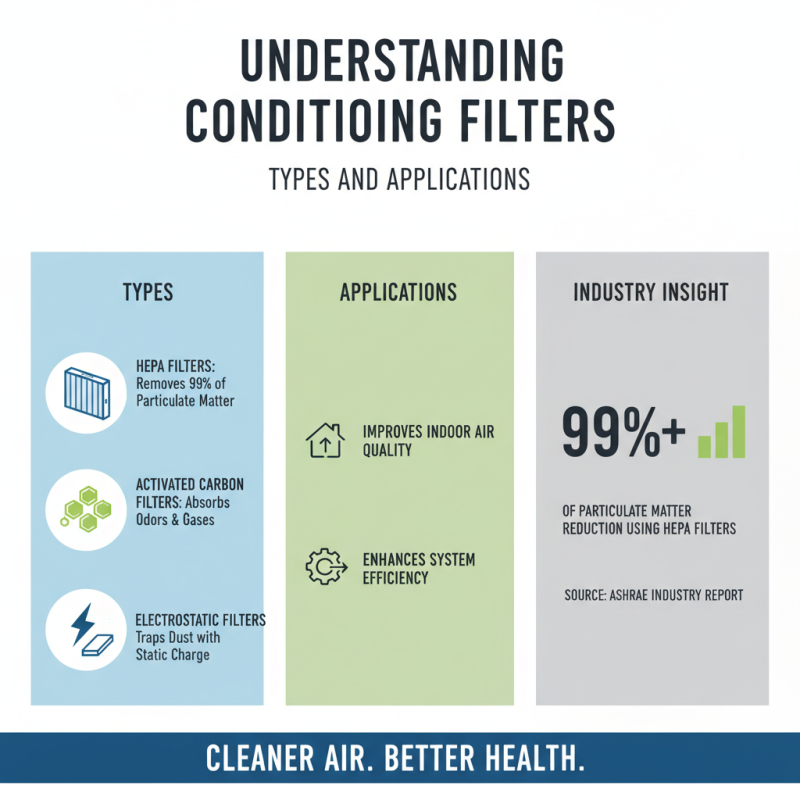
When selecting a conditioning filter, it's essential to understand the various types and their applications. Conditioning filters play a crucial role in enhancing air quality and improving system efficiency. Some common types include HEPA filters, activated carbon filters, and electrostatic filters. According to a recent industry report by the American Society of Heating, Refrigerating and Air-Conditioning Engineers (ASHRAE), using HEPA filters can reduce particulate matter by over 99%. This is significant in environments where air purity is vital.
Activated carbon filters are effective at removing odors and volatile organic compounds (VOCs). They work by adsorbing harmful gases onto their surfaces. Interestingly, one study found that these filters can capture more than 90% of certain VOCs in indoor environments. However, they may require more frequent replacement and maintenance, raising questions about long-term costs.
Electrostatic filters, on the other hand, utilize an electric charge to attract particles. While these filters can be efficient, they may not be as effective against smaller pollutants. The choice between these filters often depends on specific needs, such as allergy concerns or energy efficiency goals. This complexity can lead to confusion, emphasizing the need for thorough research and professional advice. Understanding these factors can help ensure that users choose the right filter for their unique circumstances.
Key Factors in Selecting the Right Conditioning Filter
Choosing the right conditioning filter can feel overwhelming. There are several key factors to consider that can make the selection process clearer. One of the most vital aspects is the filter's efficiency rating. A higher rating often indicates better performance. However, this can vary based on your specific needs and environment. Some filters might look impressive on paper but may not deliver the expected results in real life.
Another important element is the size and compatibility with your existing system. A filter that fits poorly can lead to inefficiencies and even damage. Measure your current filter or consult your system’s manual. Not all filters perform the same in different conditions. Some may clog quickly in dusty environments while others excel.
Lastly, consider maintenance needs. Some filters require frequent changes, while others last longer, affecting overall costs. In emergency situations, it’s crucial to have a reliable filter that works as intended. Reflections on these factors can guide you toward a more informed decision. Understanding these concepts can simplify the complex world of conditioning filters.
Analyzing Historical Data on Filter Performance and Longevity
When selecting a conditioning filter, understanding historical data on filter performance is essential. Studies indicate that filters vary significantly in effectiveness over time. Some filters lose efficiency quickly, while others maintain their performance for longer periods. Analyzing this data can give insight into which filters are more reliable.
Longevity is another crucial factor. Filters that have been tested over extended durations show consistent results. For example, one study compared filters used in different environments. The results revealed that environmental factors can greatly affect filter lifespan. Filters in humid climates degrade faster than those in dry conditions.
It's important to remember that historical data isn’t flawless. Variations in testing methods can lead to discrepancies. Before choosing a filter, consider the context of the data. Rely on a comprehensive analysis of performance across various environments to make informed decisions. Fine-tuning your selection process can greatly enhance the effectiveness of your conditioning systems.
Impact of Filter Efficiency Ratings on System Performance
When selecting a conditioning filter, efficiency ratings play a key role. These ratings reflect how well the filter can remove particles from the air. Higher ratings mean better performance, which can impact your overall system efficiency. A filter with a MERV rating of 8 or higher is ideal for residential settings, capturing dust, pollen, and pet dander effectively.
It's important to balance efficiency with system compatibility. A highly efficient filter may restrict airflow if your system isn’t designed for it. This can lead to increased energy costs and reduced system life. Choose a filter that matches your system’s capabilities to avoid these potential pitfalls.
**Tips:** Always check your HVAC system’s specifications. Consider the air quality needs of your home. If allergies are a concern, prioritize HEPA filters. Regularly replace filters to maintain efficiency. A clean filter not only enhances air quality but also prolongs system lifespan. Cloudy filters can surprisingly limit airflow, so don’t overlook this simple task.
2026 How to Choose the Right Conditioning Filter for Your Needs? - Impact of Filter Efficiency Ratings on System Performance
| Filter Type |
Efficiency Rating (%) |
Typical Applications |
Estimated Lifespan (Months) |
Pressure Drop (inches w.c.) |
| HEPA Filter |
99.97 |
Hospitals, Clean Rooms |
12 |
0.5 |
| MERV 8 Filter |
70-85 |
Residential, Offices |
6 |
0.25 |
| Activated Carbon Filter |
N/A |
Odor Removal, Chemical Control |
12 |
0.3 |
| MERV 13 Filter |
90-95 |
Schools, Commercial Buildings |
9 |
0.4 |
| Electrostatic Filter |
85-95 |
HVAC Systems, Home Use |
12 |
0.2 |
Common Mistakes to Avoid When Choosing Conditioning Filters
When selecting conditioning filters, many make common mistakes that can lead to inefficiency. A report by the
International Filter Association states that
40% of users overlook the specific requirements of their system. This oversight can result in poor
performance and increased energy costs. It's crucial to assess the airflow needs of your
HVAC system before purchasing.
Another mistake is ignoring the MERV ratings. Filters with high MERV ratings trap more particles but can impact airflow. The
ASHRAE Journal highlights that a filter with a MERV rating of 13 can capture 90% of airborne
particles. However, if the filter is too dense for your system, it can cause strain. This balance is essential for
optimal function.
Additionally, consumers often underestimate maintenance needs. A report from the
U.S. Energy Information Administration suggests that regular filter changes can reduce energy
consumption by 5-15%. Filters that are not regularly replaced can hinder performance and lead to higher
utility bills. Keeping track of change intervals ensures
longevity and
efficiency.

 Products
 FUEL FILTER
 OIL ELEMENT FILTER
 OIL FILTER
 CABIN FILTER
 AIR FILTER