In 2026, global buyers are evaluating Car Air Filter manufacturers beyond price, packaging, and production capacity. Vehicle air filtration now connects directly with engine efficiency, cabin comfort, particulate exposure, and aftermarket reliability. The World Health Organization’s 2021 air-quality guidelines set an annual PM2.5 guideline of only 5 µg/m³, highlighting the pressure on filtration systems in polluted urban environments. The stakes are practical.
This guide examines leading manufacturers through measurable criteria, including filtration efficiency, pressure drop, media quality, dimensional accuracy, testing capability, and supply consistency. ISO 5011 remains important for engine air-cleaner testing, while ISO 11155-1 and ISO 11155-2 address particulate and gas filtration in passenger compartments. Buyers should also review independent test reports, factory audits, traceability records, and fitment coverage across vehicle platforms. A strong catalog is not enough.
Market research reports from Grand View Research, MarketsandMarkets, and other automotive aftermarket analysts indicate continued growth in filtration demand, supported by rising vehicle ownership, stricter emissions expectations, and longer vehicle service lives. However, published market estimates vary because they define replacement filters, OEM supply, and cabin products differently. That limitation deserves attention.
The manufacturers featured here are assessed for real-world procurement value. Their capabilities include molded sealing edges, pleated synthetic media, activated-carbon layers, automated inspection, and export documentation. Yet no supplier is perfect. Buyers should confirm performance under local dust conditions, humidity, driving patterns, and service intervals before signing long-term agreements. Reliable decisions require evidence, not impressive claims.
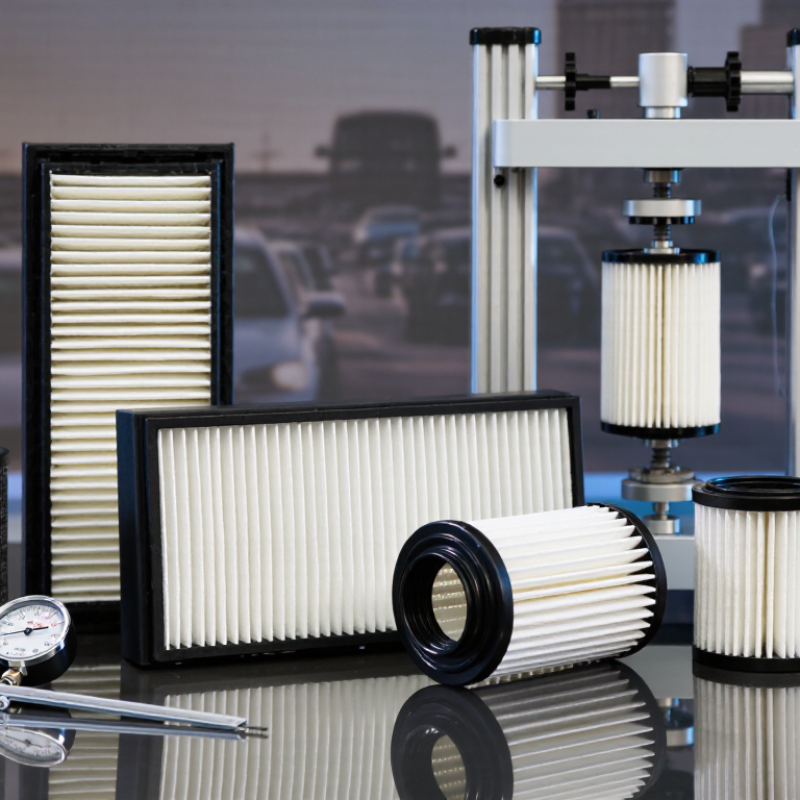
The 2026 car air filter market is becoming more technical and regionally diverse. Manufacturers now balance filtration efficiency, airflow, cost, and delivery speed. Many factories use synthetic nonwoven media instead of traditional paper alone. Multi-layer designs can trap fine dust while maintaining stable intake flow. That balance is difficult.
Production lines increasingly include automated pleating, adhesive control, sealing inspection, and barcode traceability. Experienced plants test pressure drop and dust-loading performance under controlled conditions. ISO 5011 testing is often used for engine intake filters. However, laboratory results may not match heavily polluted roads, humid climates, or long service intervals. Buyers should request complete test conditions.
Global suppliers are also adjusting materials and logistics. Regional warehouses help reduce delays for vehicle assemblers and aftermarket distributors. Some manufacturers offer customized dimensions, gasket compounds, and label languages for different markets. Quality consistency remains a concern. A filter can look precise but still leak around its frame. In field inspections, seal compression and pleat stability deserve close attention. Not every supplier publishes enough data, and that weakness should be questioned. Electric vehicles may reduce demand for engine filters, but cabin filtration and thermal-system protection continue to create new opportunities. Procurement teams increasingly review factory audits, batch records, sample approval, and complaint-response times before signing long-term agreements. Costs matter, but replacement failures cost more.

For global buyers, evaluating car air filter manufacturers requires more than comparing unit prices. OICA reported 92.5 million vehicles produced worldwide in 2024. Yet the IEA recorded more than 17 million electric car sales that year. This shift changes future demand for engine filters, cabin filters, and thermal-management components. Ask manufacturers for vehicle-application data, pressure-drop results, dust-loading tests, and documented production controls. ISO 5011 supports testing for engine intake air cleaners, while ISO 11155 covers automotive cabin air filters. A serious supplier should explain which standard supports each claim.
Tips: Request samples from different production batches. Check pleat depth, sealing edges, frame rigidity, and gasket recovery after compression. Independent laboratory reports are stronger than internal brochures. Also review traceability records, complaint rates, lead times, and export packaging. Grand View Research has identified continued growth in the global automotive filters market, but forecasts vary by scope and product definition. Treat large market figures carefully. They do not prove one factory performs well.
Experience shows that weak evaluation often starts with a perfect-looking sample. Production consistency matters more. Confirm whether the manufacturer controls filter media, adhesives, tooling, and final inspection. Ask for failure analysis from real field returns. Some suppliers may hesitate, and that hesitation deserves attention. A low price can reflect efficient production, or hidden compromises. Buyers should compare total cost, including freight, rejects, warranty exposure, and replenishment delays. A small pilot order remains useful, even when certification documents appear complete.
2026 Top Car Air Filter Manufacturers for Global Buyers
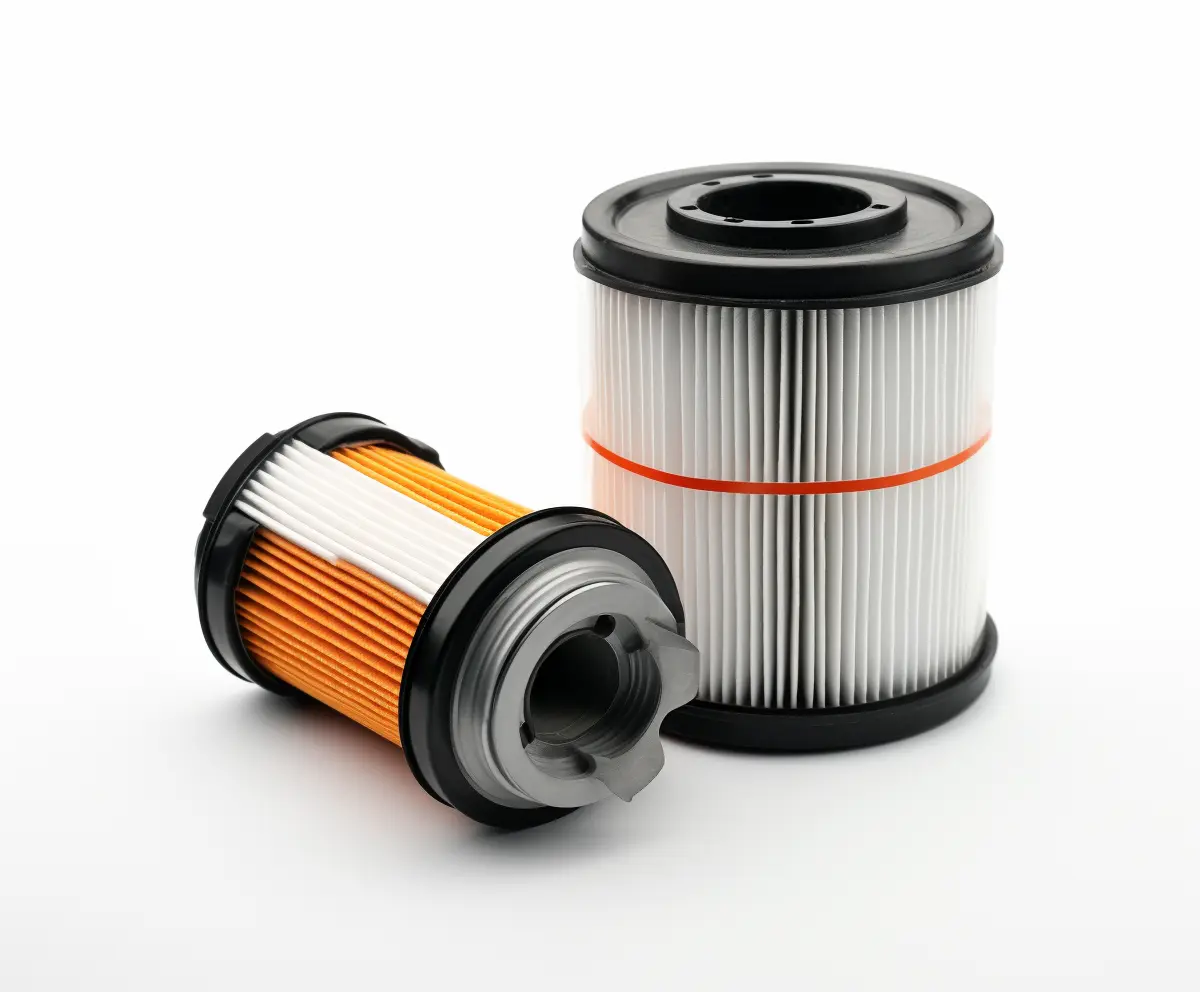
Top car air filter manufacturers for international markets must balance filtration, airflow, fitment, and dependable supply. A strong manufacturer provides clear vehicle applications, dimensional drawings, material specifications, and batch traceability. Filter media should capture fine dust without restricting engine airflow. Laboratory results matter, but real road conditions matter too. Heat, humidity, heavy traffic, and unpaved roads can expose weak designs quickly.
International buyers should review quality systems, production capacity, inspection procedures, and export documentation. Certifications such as ISO 9001 or IATF 16949 can support credibility, but they do not replace independent testing. Ask for dust-loading results, sealing performance, pressure-drop data, and samples from current production. Packaging also deserves attention. Crushed cartons, unclear labels, or missing installation details can create avoidable problems at distribution centers. A polished catalog is not enough. Some suppliers look impressive online, yet respond slowly when specifications change. That weakness should not be ignored.
Tips: Compare samples under identical conditions. Check the gasket by hand. It should feel even, flexible, and firmly bonded. Confirm carton markings before shipment. Recheck fitment data with local technicians, because catalog errors occasionally survive several revisions. Price is useful, but stable quality and accurate documentation usually protect international buyers better.
Regional vehicle production indicates the relative scale of replacement-filter demand and international supply opportunities. Asia and Oceania represent the largest production base, followed by Europe and the Americas. Figures are rounded 2023 motor-vehicle production estimates based on OICA regional statistics; production volume is used as a market-sizing indicator, not as manufacturer or brand sales data.
Global buyers should judge car air filter manufacturers by verified standards, not attractive efficiency claims. ISO 5011 evaluates engine filters through dust loading, pressure drop, and filtration efficiency tests. For cabin filters, ISO 11155-1 examines particle removal and airflow under controlled conditions. These tests matter when a filter is installed behind a dashboard, where limited space can quickly restrict ventilation.
The World Health Organization’s 2022 air quality database reported that 99% of people breathe air exceeding its guideline limits. This strengthens demand for fine-particle and activated-carbon cabin filters. However, laboratory efficiency does not always match road performance. A filter packed with dust on a busy urban route may reduce airflow sooner than expected. That detail is often overlooked.
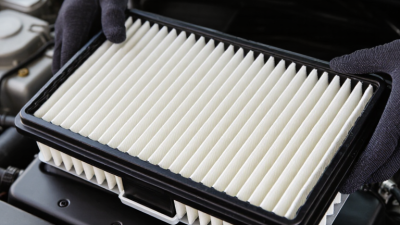
Vehicle compatibility requires more than matching dimensions. Buyers should verify sealing foam, pleat depth, airflow direction, sensor clearance, and service intervals. The European Automobile Manufacturers’ Association reported an average EU passenger-car age of 12.5 years in 2022. Therefore, reliable suppliers need coverage for older platforms, changing engine bays, and regional driving conditions. My practical concern is simple: universal claims remain weak without application-level test data. Manufacturers should publish pressure-drop curves, tested particle sizes, and fitment records for each vehicle reference.
Global buyers should evaluate car air filter manufacturers through repeatable evidence, not polished catalogs. In factory audits, I check pleat spacing, seal hardness, media bonding, and cleanliness around cutting stations. A filter can look excellent and still leak at the frame. Request production samples from different batches, not one carefully selected unit. Small defects spread.
Quality control should include airflow resistance, dust-holding capacity, burst strength, and dimensional checks. Ask for test methods, acceptance limits, calibration records, and corrective-action reports. Independent laboratory testing is useful when results affect fleet contracts or regulated vehicle applications. However, laboratory figures may not match dusty roads, humid ports, or rushed workshop installation. That gap deserves attention. Suppliers should explain how they control variation during material changes and peak seasons.
For global purchasing, confirm tariff codes, packaging dimensions, pallet limits, lead times, and replacement-part traceability. Clear labels should show part references, production dates, storage conditions, and applicable destination-market requirements. Check export documents before payment, including invoices, packing lists, certificates, and inspection records. I also compare communication speed with actual problem-solving quality. Fast replies are not proof. A realistic contract should define sampling, tolerances, claims, and remedies for nonconforming goods. My own audits are imperfect; photographs miss odor, handling pressure, and long-term storage effects. That limitation should remain visible when approving a manufacturer.
Anonymous supplier-capability benchmark for passenger-car and light-commercial-vehicle air filters. The comparison focuses on sourcing suitability, quality systems, production capability, and international purchasing factors without displaying company or brand names.
| Anonymous Supplier Profile | Primary Production Region | Main Product Coverage | Typical Filter Media | Applicable Quality Standards | Indicative Production Capability | Customization Capability | Typical Export Readiness | Key Quality-Control Points | Best Fit for Global Buyers | Buyer Due-Diligence Priority |
|---|---|---|---|---|---|---|---|---|---|---|
| Profile A — Large Integrated Producer | East Asia | Engine air filters Cabin air filters Heavy-duty filters | Cellulose, synthetic nonwoven, multilayer composite | ISO 9001; IATF 16949 commonly requested by automotive customers; ISO 14001 for environmental management | High-volume automated pleating, molding, adhesive application, and leak-testing lines | Vehicle-specific dimensions, pleat count, gasket geometry, media grade, labels, and packaging | Strong container-loading capability; commonly supports commercial invoices, packing lists, certificates of origin, and pre-shipment inspection | Media basis weight, filtration efficiency, pressure drop, pleat stability, sealing integrity, dimensional consistency | Large distributors, private-label programs, and multi-country aftermarket supply | Validate actual IATF scope, product traceability, lot records, and capacity reserved for the buyer |
| Profile B — Automotive-Focused Tier Supplier | Central and Eastern Europe | Engine air filters Cabin filters OEM service parts | High-performance cellulose, synthetic microfiber, activated-carbon media | IATF 16949 typically required for automotive supply; ISO 9001; customer-specific quality requirements | Medium-to-high capacity with strong process control and shorter regional replenishment cycles | Engineering changes, tooling coordination, technical drawings, packaging localization, and validation samples | Well suited to European delivery lanes; generally supports palletized shipments and structured quality documentation | Initial sample approval, material certificates, dimensional reports, burst resistance, airflow restriction, cleanliness | Buyers prioritizing European lead times, engineering support, and automotive-grade documentation | Confirm production location, warranty terms, change-notification procedure, and applicable vehicle coverage |
| Profile C — Flexible Aftermarket Specialist | South Asia | Passenger-car filters Commercial-vehicle filters Replacement cabin filters | Cellulose, synthetic felt, electrostatically charged nonwoven | ISO 9001 commonly available; product testing may be arranged to buyer specifications | Medium capacity with flexible production scheduling and broad part-number coverage | Low-to-medium minimum order quantities, custom carton artwork, mixed container loading, and sampling support | Suitable for importers requiring consolidated shipments and mixed-SKU purchasing | Correct media orientation, adhesive coverage, frame strength, gasket compression, barcode accuracy | Regional distributors and buyers testing new aftermarket product lines | Audit incoming materials, verify measurement equipment, and require approved samples before mass production |
| Profile D — High-Volume Cost-Competitive Producer | South-East Asia | Panel air filters Round air filters Cabin filters | Standard cellulose and synthetic nonwoven; optional activated-carbon layer | ISO 9001 frequently available; buyer-specific inspection plans are important | High output for standard geometries, with automated cutting, pleating, and packing operations | Standardized designs, selected custom dimensions, private packaging, and carton configuration | Competitive ocean freight options and practical support for full-container orders | Part-number separation, pleat count, filter height, end-cap bonding, carton compression, moisture protection | Price-sensitive buyers with stable, high-volume demand and standardized specifications | Compare landed cost rather than unit price; verify tooling ownership, defect allowance, and packing strength |
| Profile E — Premium Cabin-Air Specialist | Western Europe | Cabin particulate filters Activated-carbon filters Fine-particle media | Fine synthetic fiber, multilayer media, activated carbon, optional antimicrobial treatment | ISO 9001; automotive customer approval; performance testing based on applicable cabin-air requirements | Medium capacity focused on controlled media conversion and higher-value applications | Media construction, odor-control layer, sensor-compatible design, airflow target, and technical documentation | Strong documentation and compliance support; usually higher purchase and freight costs | Particle-removal performance, pressure drop, odor adsorption, media uniformity, housing fit, and seal quality | Premium aftermarket channels and buyers emphasizing cabin comfort and measurable performance | Request independent test reports and define test method, particle size range, airflow, and acceptance limits |
| Profile F — Heavy-Duty and Fleet Filter Producer | North America | Truck air filters Off-road filters Fleet cabin filters | High-strength cellulose, synthetic media, reinforced composite structures | ISO 9001; fleet and industrial customer specifications; application-specific validation | Medium-to-high capacity for larger filter dimensions and robust construction | Large-format filters, reinforced end caps, high-dust-load designs, and fleet packaging | Experienced with regional distribution, pallet shipments, and fleet-program replenishment | Dust-holding capacity, structural strength, water resistance, seal durability, vibration resistance, pressure drop | Commercial fleets, construction equipment distributors, and severe-duty applications | Conduct application testing under actual dust, vibration, temperature, and service-interval conditions |
| Profile G — Low-MOQ Private-Label Converter | Middle East and North Africa | Passenger-car filters Regional replacement parts | Purchased cellulose and synthetic media converted into vehicle-specific filter assemblies | ISO 9001 may be available; third-party inspection is advisable for new suppliers | Low-to-medium capacity with emphasis on short runs and regional applications | Low-volume packaging, bilingual labels, local vehicle coverage, and mixed-SKU orders | Useful for regional importers; export documentation and logistics capability vary by supplier | Material identity, assembly cleanliness, dimensional accuracy, label conformity, carton count, and batch separation | New market entrants and distributors needing limited initial investment | Check export experience, customs documentation, production subcontracting, and after-sales response time |
| Profile H — Digitally Managed Multi-Plant Supplier | Multiple Asian production locations | Engine filters Cabin filters Industrial cross-reference products | Cellulose, synthetic, composite, and activated-carbon media sourced from qualified mills | ISO 9001; selected plants may hold IATF 16949; digital inspection records may be available | High aggregate capacity, with production allocated across plants according to SKU and volume | Cross-reference development, digital catalogs, barcode systems, packaging automation, and demand planning | Strong support for electronic purchase orders, forecast sharing, container planning, and multi-market documentation | Supplier change control, data accuracy, SKU traceability, barcode verification, incoming-media inspection, final audit | Global distributors managing large catalogs and recurring replenishment programs | Identify the exact manufacturing site for every SKU and prohibit unapproved plant transfers |
Purchasing note: The profiles and ranges above are anonymous market benchmarks rather than company rankings. Before placing an order, buyers should verify certification validity, test methods, production-site identity, part-number coverage, minimum order quantity, lead time, Incoterms, warranty provisions, and independent pre-shipment inspection results.